
Interesting Facts About Anchorage Alaska — from a City of Tents to Today
Before Anchorage had paved streets, it had tents in the mud, supplies arriving by barge, and winter closing in fast. These Interesting Facts about Anchorage Alaska start at Ship Creek and follow the city through the wild, vivid details that shaped it.
From the 1914 city of tents at Ship Creek to 4th Avenue, parks, planes and more you remember.
Jump to a Section
1914 City of Tents at Ship Creek
How Anchorage Got its Name
First School and Early Hospitals
Park Strip an Airstrip and Golf Course
First Movie Theatre in Anchorage
All About Anchorage
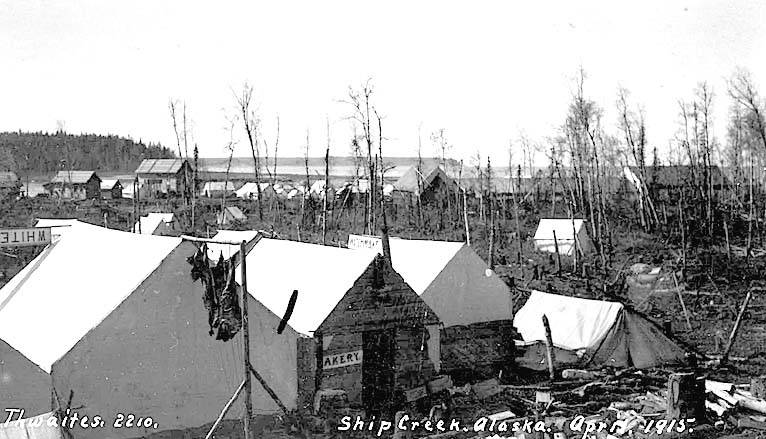
1914 City of tents at Ship Creek
A New Town Struggles to Begin
Anchorage didn't begin with fancy plans and polished buildings.
It began with hard work.
In 1914, Ship Creek became a railroad construction port-- and the town that grew around it was for the most part, a "company town" for the Alaska Railroad.
People arrived with tools, hope, and not much else... And found one big problem.
There was nowhere to stay.
So they did what people always do in Alaska when there's more grit than comfort available-- they made it work.
Trees came down along the creek. Canvas went up. And a bare-bones city of tents appeared where wilderness had been holding the line.
If you try to picture it, don't picture it “cute”. Picture it practicle:
— tents in mud
— makeshift boardwalks
— a town forming in real time
— winter coming, ready or not
Some folks came for railroad jobs. Others set up what the town needed right away. Food, supplies, a place to gather, even a newspaper-operating out of tents.
And from that rough beginning, Anchorage stepped into the world as a brand-new place with a future it hadn't earned yet... but it was about to.
Water, Mud, and Cook Inlet
From its humble beginnings, Anchorage has had many firsts along the way.
To begin with:
— Water came from Ship Creek
— Mud forced relocation toward Government Hill
— Shopping meant a visit to barges in Cook Inlet
Can you imagine?
It's hard to keep a town alive when the ground is more swamp than street.
Early Anchorage was a muddy mess.
Tents sat on top of muck and mire, and in no time, they had to move out of the worst of it to an area now known as Government Hill.
And here's something that still makes you pause:
Instead of hopping into your car to run errands, you might have to hop in a boat.
Cook Inlet became home to offshore barges that carried lumber, hardware, and supplies -- the kind of everyday things a new town couldn't live without.
Shopping didn't mean a quick stop. It meant timing, watching tides, the weather, and whatever you could haul back to shore.
How Anchorage got its Name
After first calling it “Ship Creek” (an obvious choice, given its location), the population came together to vote on an official name.
Names Considered:
— Winalaska
— Matanuska
— Homestead
— Gateway
— Terminal
— Alaska City
— Ship Creek
Another name considered was “Lane,” after Secretary of the Interior Franklin D. Lane.
Alaska City received the most votes. Lane came in second.
But the U.S. Post Office stepped in to make the final decision on the name of this new town.
They chose “Anchorage”.
Soon, maps and official documents included the new town of Anchorage.
First School and Early Hospitals
Everything but a School
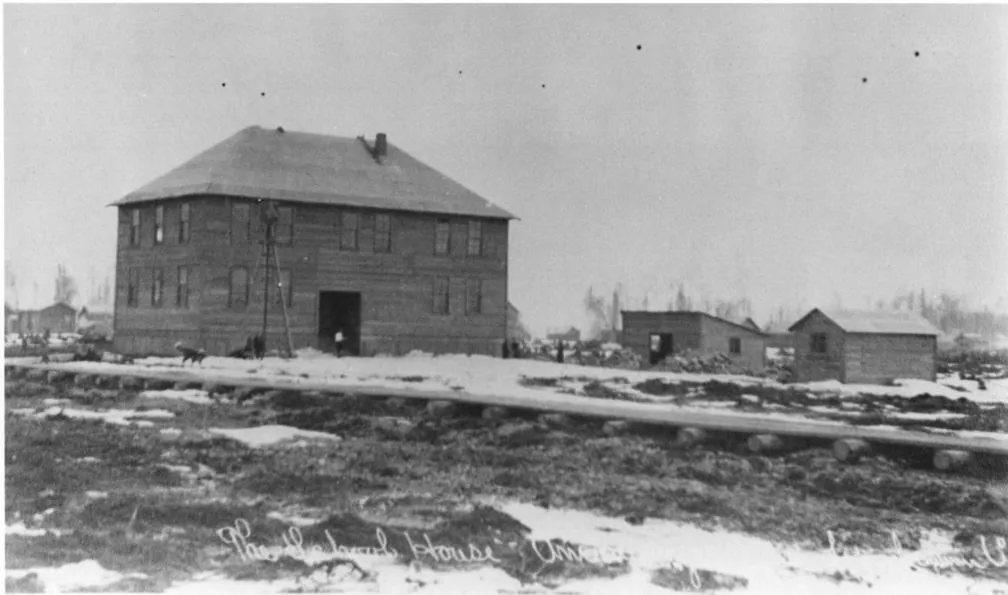
Pictured above was the first schoolhouse in Anchorage, Alaska.
Built in 1915 when the settlement was still just a city of tents.
Students used oil lamps for light. There was no paint available for the building, and it had no indoor restrooms. To make matters worse, the outdoor toilets did not even meet the minimum standards of the new town site. And there was no heating system.
As crude as it was, the one and only school was the beginning of public education in what would become Alaska's largest city.
The First Hospital
in Anchorage was Surrounded by Tents
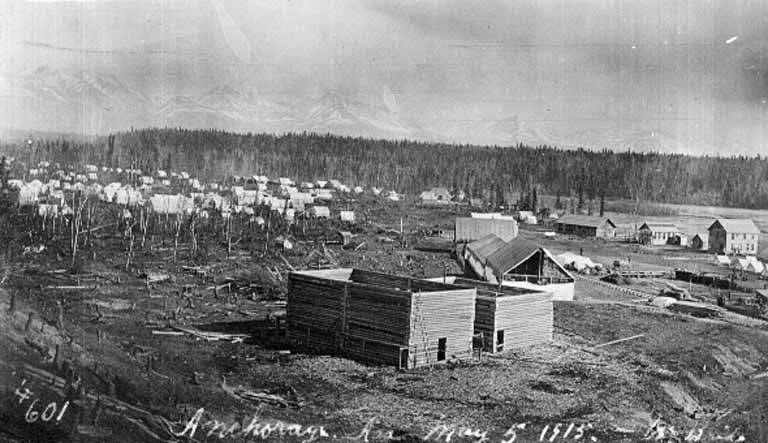
In the picture above, the two log buildings that are under construction comprised the Alaska Railroad Hospital.
By the way, this first hospital was only for railroad workers.
Providence Hospital
it Served Everyone
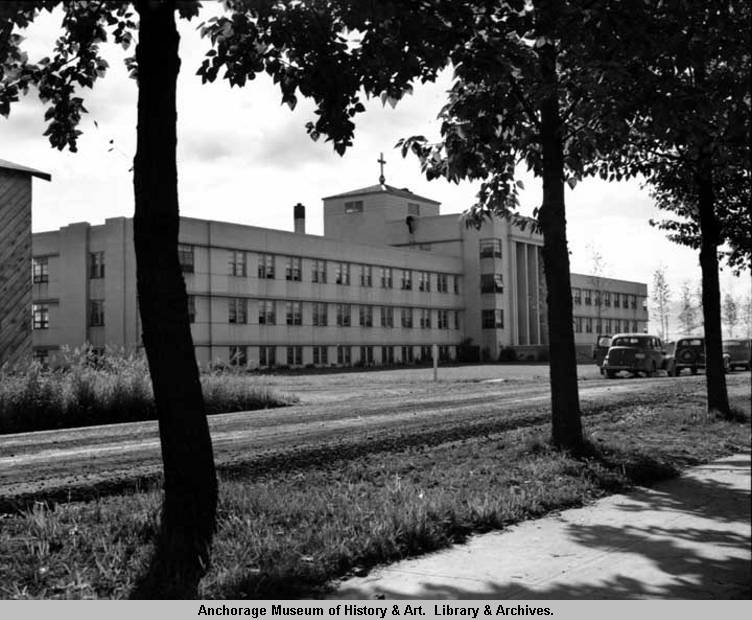
Circa 1945 -1949.
Providence Hospital began at 9th and L streets, and was established by the Sisters of Providence.
This hospital served all of Anchorage—not just railroad workers.
Many residents contributed funds, furniture, and other items. Alaskan artist Sydney Laurence even contributed a painting of Mount McKinley.
Providence Hospital opened in 1939.
“Thank you, thank you, thank you!
I am so grateful for this
Anchorage Memories website” Robert
Park Strip: Airstrip and Golf Course
Play Golf
and
Watch Out
for the
Bush Pilots
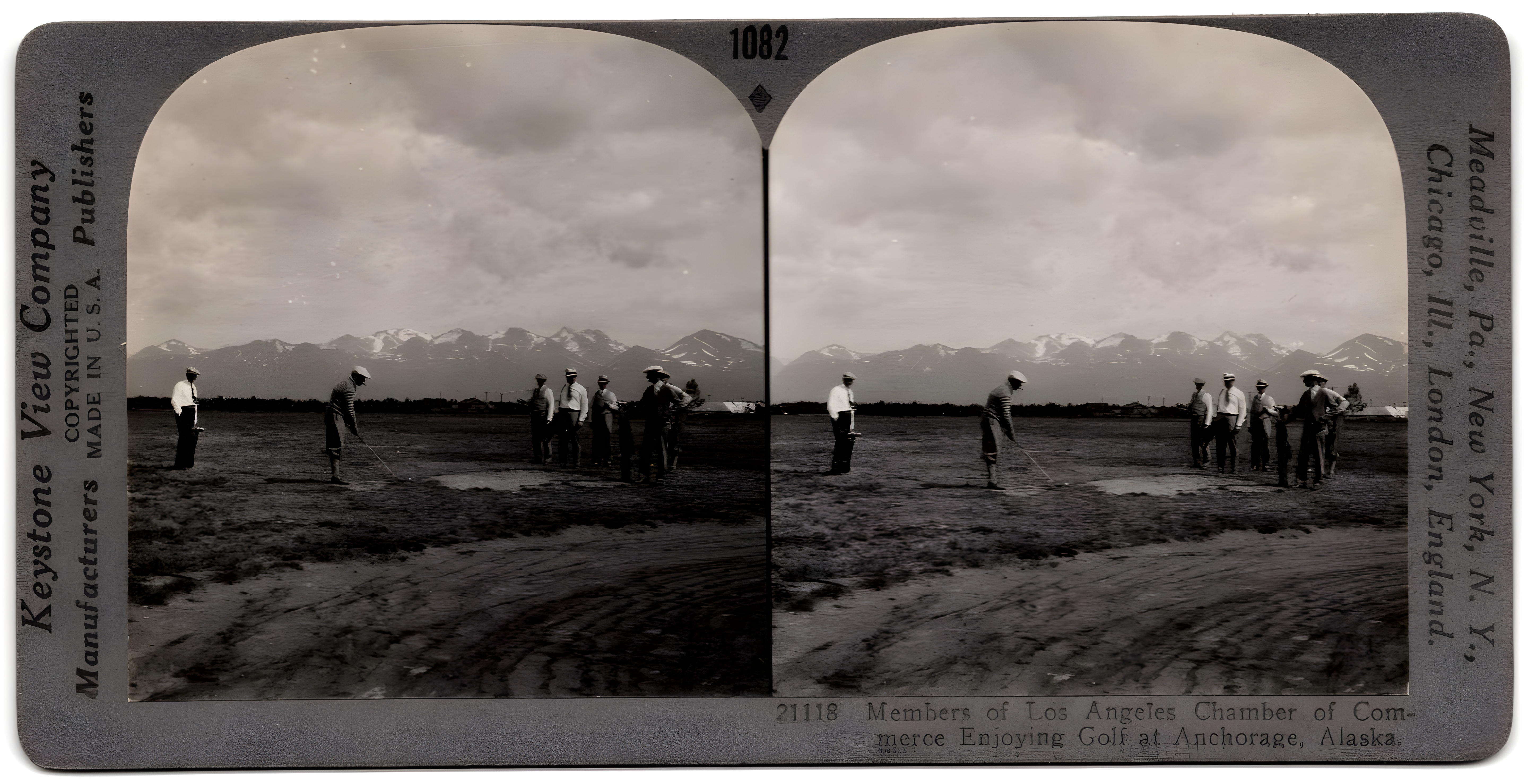
The picture above is a
1923 stereoscope picture of the golf course.
In 1917, the town created a firebreak by clearing a large strip of land. Later, bush pilots were able to use it to take off and land their small aircraft.
In 1923, a golf course was built on the landing strip, and golfers were instructed to “give aircraft the right of way.”
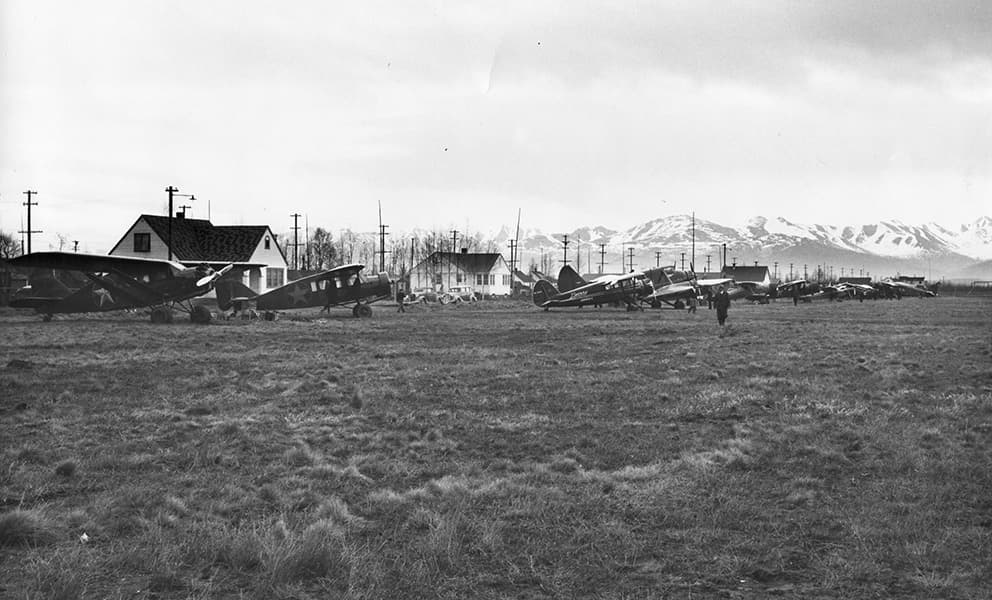
Then in 1954, the firebreak, aircraft landing strip, and golf course became known as the “Park Strip,” the largest park in Anchorage.
In the summer, the Park Strip has been a place where a kiddy wading pool entertained the little ones. Kids could also explore an actual train engine. The park has hosted everything from a visiting circus to the Pope.
In 1970, the Park Strip was officially named Delaney Park, in honor of Mayor James Delaney.
BONUS
Want to know more about the early airports in Anchorage?
Take a look at Anchorage Airport Memories and discover.All about Anchorage
Taking Care
of Business
Anchorage Grows Up
Anchorage became incorporated on November 23, 1970.
Always Boom or Bust
First, put these Interesting Facts About Anchorage Alaska in perspective.
It all began in 1914, but by the 1940s to around 1951, the population had grown from about 3,000 to around 47,000.
When it comes to population, Anchorage is home to about 44 percent of all the people living in Alaska.
That translates to an Anchorage population of 294,356 people in 2017, or about the same population that you'd find in the state of Delaware.
And because the population
responds to “boom or bust” situations like the oil pipeline days of the 1970s,
citizens of Anchorage have been through many population changes—both up and down.
We Don't Need No
Stinking Sales Tax
According to Kiplinger magazine, Anchorage is the most tax-friendly city in the U.S.A.
He Had Never Heard of a “Sales Tax”
As a boy, Mike of Anchorage Memories recalls a trip from Anchorage to Texas, where he visited a local burger stand. After Mike ordered a soda, the clerk told him how much he owed, “with sales tax.” But being from Alaska, Mike had never heard of a sales tax, so he said, “What's a sales tax?”
Amused by Mike's question, the clerk immediately became thrilled to meet someone from Alaska.
Interesting Facts About
Anchorage Alaska
You'll Love These
And
the Answer
is?
Here's a question that everyone asks.
“How cold does it get?”
The average low in Anchor Town is 30.3 degrees.
But way back in February 1947, temperatures plunged to minus 38 degrees. That's right, 38 below.
And yes, that's cold, even by Anchorage standards.
BONUS
What's The Temperature
Right Now?
Those Beautiful Winter Sunsets
in Anchorage
Short, cold days mark Anchorage winters.
How Much
Daylight
in Summer
and Winter?
And while we're looking at these Interesting Facts About Anchorage Alaska.
Folks in the “lower 48” want to know about whether it's dark all the time in the winter or light all the time in the summer way up there in Anchorage?
Here's “an answer”
Winter Solstice
During the shortest day in the winter (winter solstice), the sun doesn't come up until around 10:15 am. And it sets at around 3:30pm. That means the sun only shines for a little over 6 hours on the shortest day of the year.
Summer Solstice
Alaska's largest city enjoys more daylight hours than anywhere else in the “lower 49” (the rest of the United States), with more than 19 hours of daylight during the summer solstice (the longest day of the year).
Celebrations on that day in Anchorage include late-night baseball games and golf tee times as late as 10:00pm.
And the kids love it. More daylight means they can play outside longer.
First Movie Theatre in Anchorage
The First Movie Theatre
was the Empress on 4th Avenue
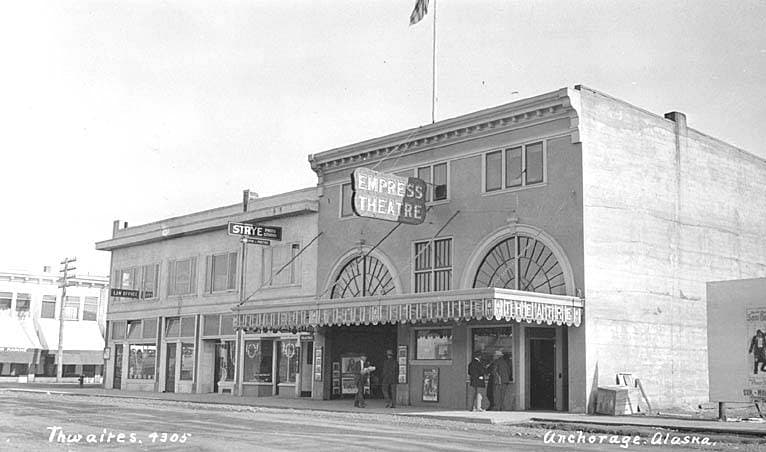
The Empress Theatre, pictured above,
showed movies into the 1950s.
Interesting Facts About Anchorage Alaska include this gem.
Way back in 1916, Captain (Cap) Austin E. Lathrop opened the Empress Movie Theater on 4th Avenue. It was the first movie theatre in Anchorage. And, because at that time, entertainment was scarce in the new town, every movie was shown to a full house.
The Empress was located just down the west side of the street from where the 4th Avenue Theater would later join the town's landscape.
A live Kimball organ accompanied the silent movies shown at the Empress Theatre in 1917.
The Lathrop movie empire included the production of at least one movie, “The Chechahcos,” shot in 1922 on location in Denali Park and Girdwood, Alaska.
A 7,000-square-foot movie studio in downtown Anchorage housed the movie's interior sets. Many residents happily appeared as actors in crowd scenes.
The movie premiered at the Empress Theatre.
Note:
The movie title was "Chechahcos", but notice that the add below uses the more common spelling of the word.
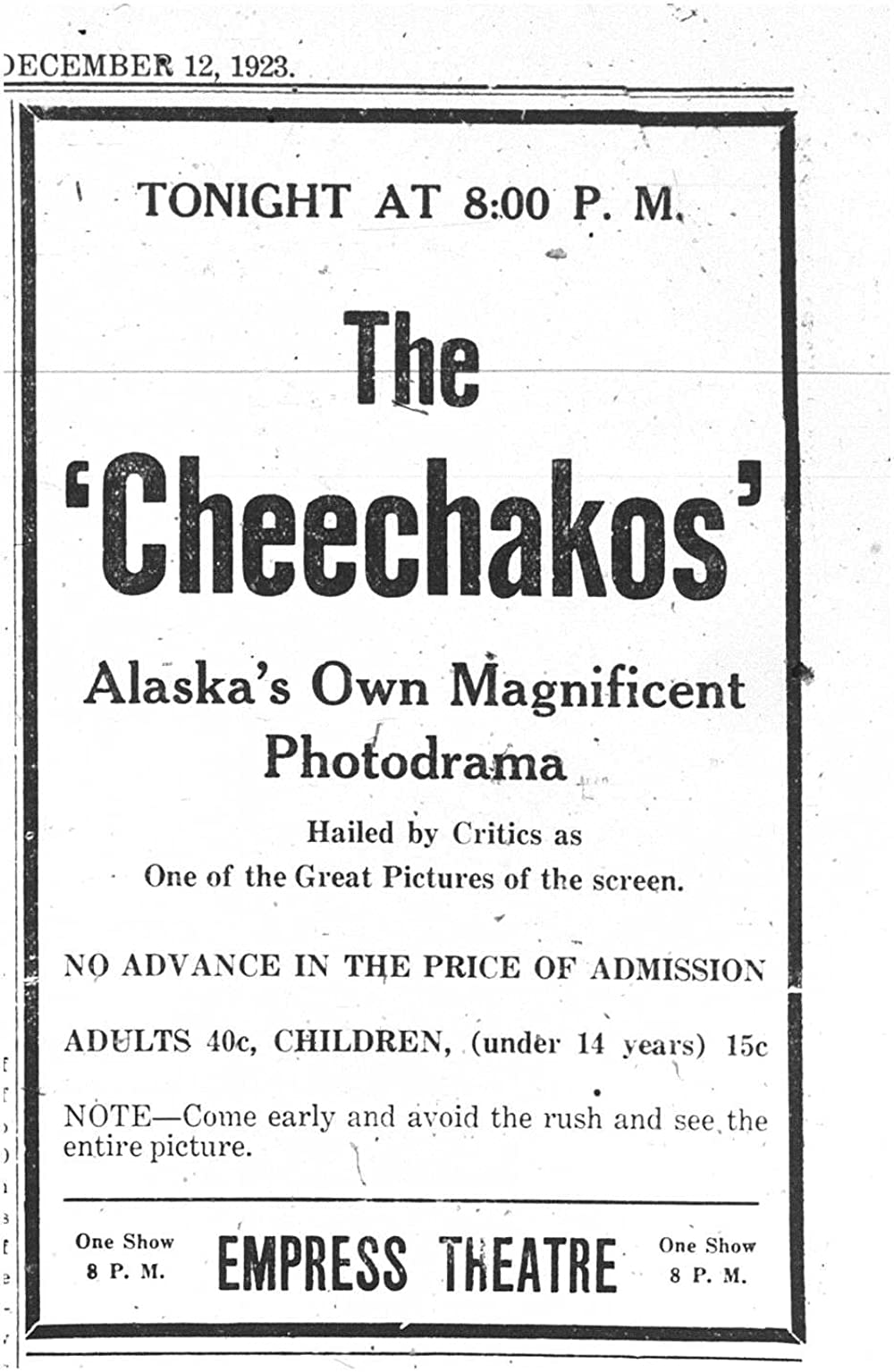
And notice in the ad above that adult tickets to the world premiere movie were .40 cents, with tickets for children under 11 years being .15 cents.
The Chechahcos was, of course, a silent movie. It was also the first and last movie produced by Lathrop.
The movie is still shown in Anchorage at special screenings from time to time.
BONUS
Want to remember Anchorage movie theatres?
Take a look at Anchorage Movie Theatre Memories and pass the popcorn.He was
the First
U.S. President
to Visit
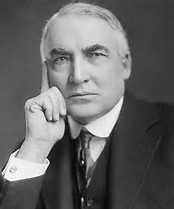
So, who was the first President of the United States to visit Anchorage?
He was our 29th President.
Warren G. Harding visited back in 1923.
He also became the first U.S. president to visit Spenard Lake.
Interesting Facts About
Anchorage Alaska
The New Town's
First Mayor
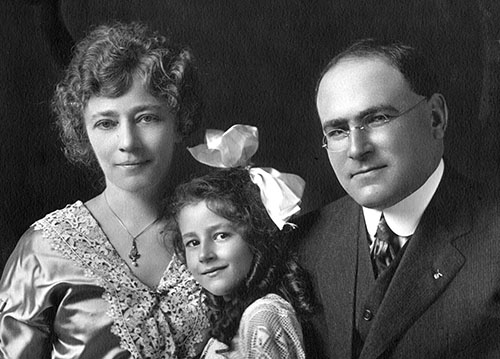
Leopold David was the first mayor, serving Anchorage from November 29, 1920, to 1923.
You can still see the residence where Leopold David and his family lived at 605 Second Avenue near downtown.
No Lawman
Until 1921
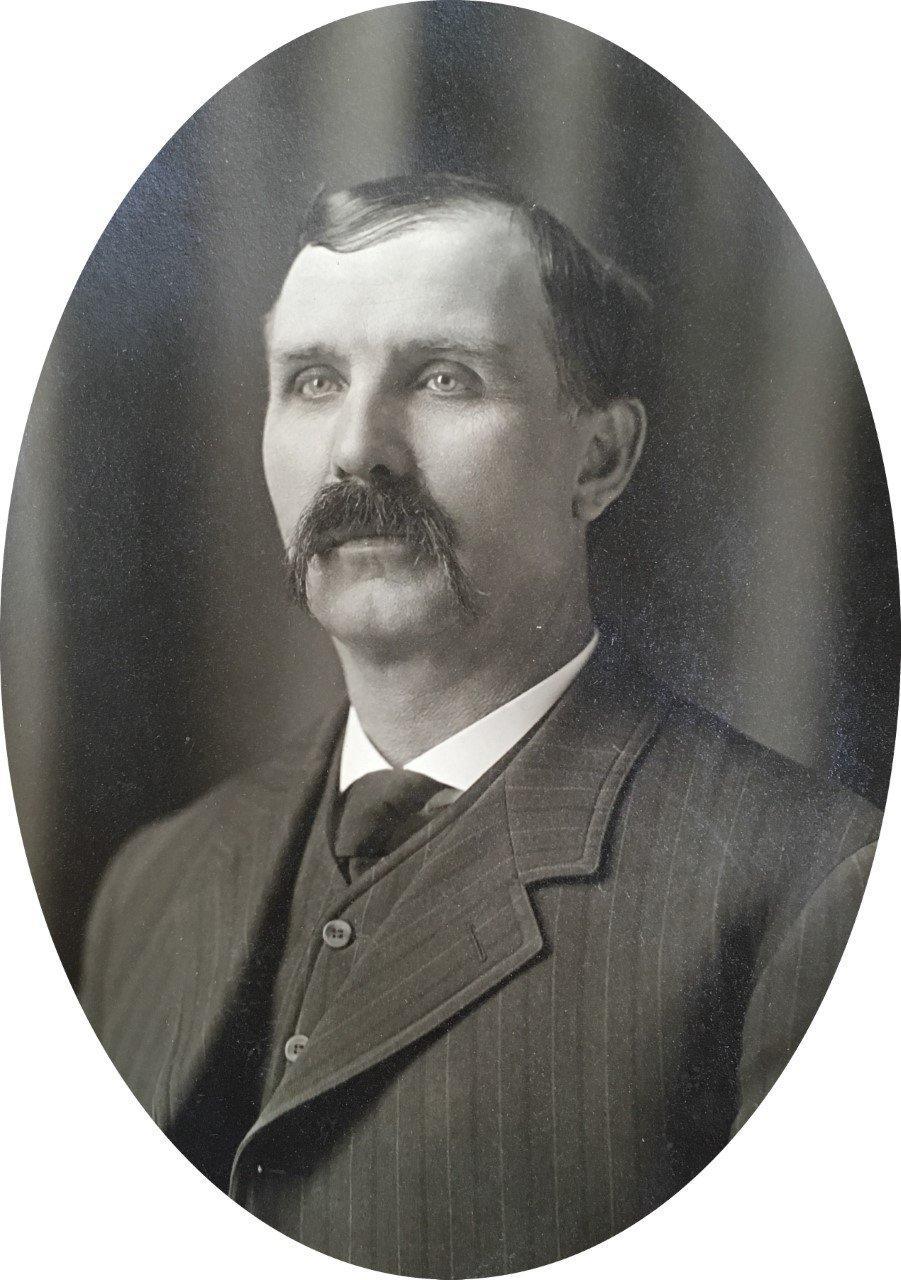
In the photo above is John J. Sturgus
Anchor Town has always been a place where “rugged individuals” come to explore Alaska.
With that in mind, “keeping the peace” has always been an adventure for Law Enforcement.
In 1921, Anchorage elected its first chief of police, Mr. John J. Sturgus. He was a one-person police department, and his salary was $200 a month. In today's dollars, that would be around $2,900.
BONUS
Fighting crime in the new town had its own unique challenges.
When the police department grew, but before they could afford a patrol car, officers responded to crimes on foot, took a taxi, or borrowed a car from a citizen.
The First
Automobile
in Anchorage
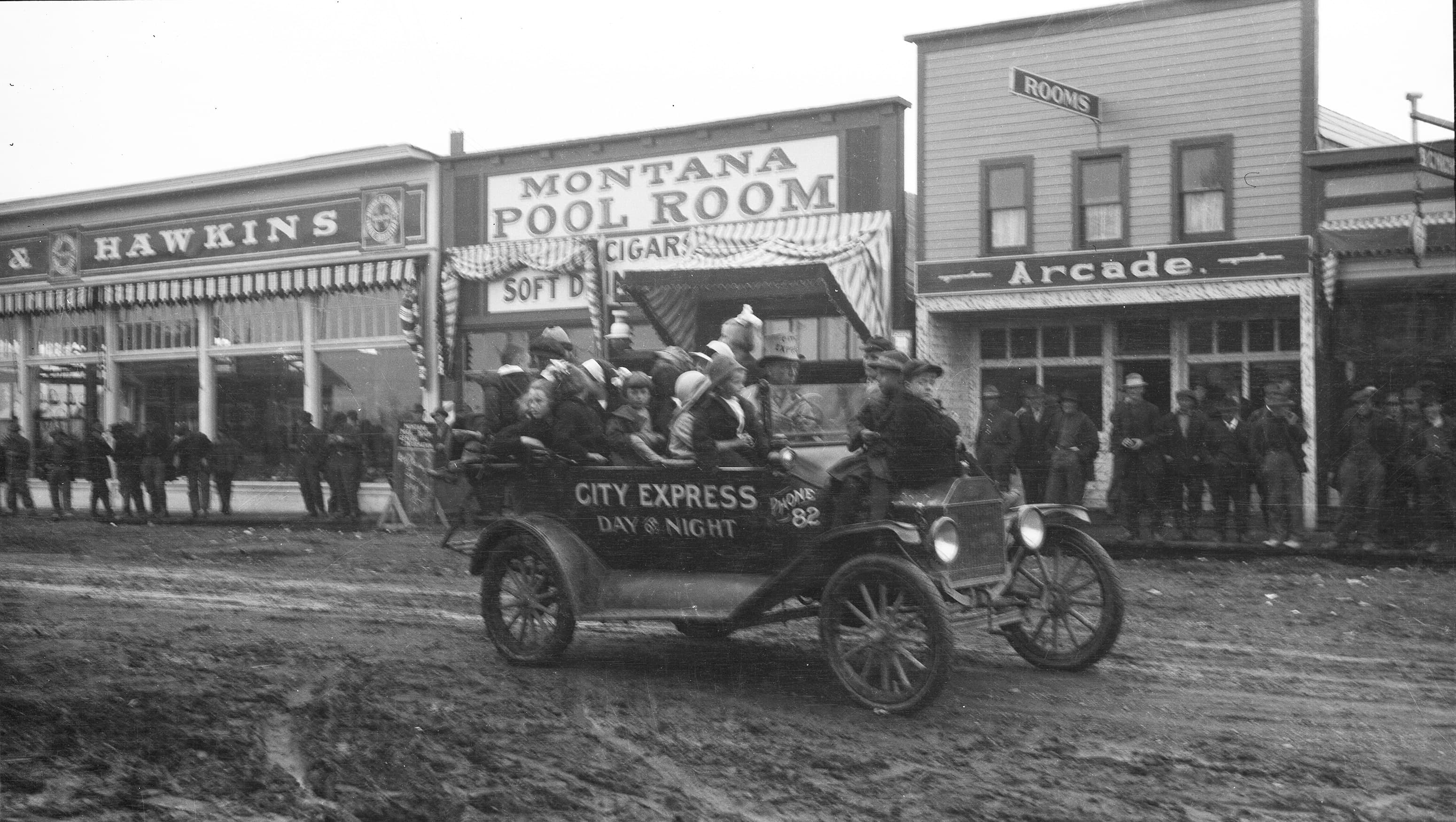
A colorful early pioneer
is the namesake of Spenard.
Joe Spenard first came to Alaska in 1910 from Ottawa, Canada.
By 1916, he made his way to the tent city on Ship Creek Flats.
A colorful character, Joe brought the first automobile to the town and began a hauling business with his truck called “City Express.”
His slogan was “Time and tide will not wait, but City Express
is never late.” He also started the town's first taxi service.
Joe Spenard built a logging road from Anchorage to “Jeter Lake.” The logging road became known as “Spenard Road,” and the lake became known as “Spenard Lake.”
Today, Spenard, possibly as a tribute to its founder, is one of the more colorful suburbs in Anchor Town.
BONUS

How Many of These Facts
do You Know?
Anchorage's
First Hockey Team
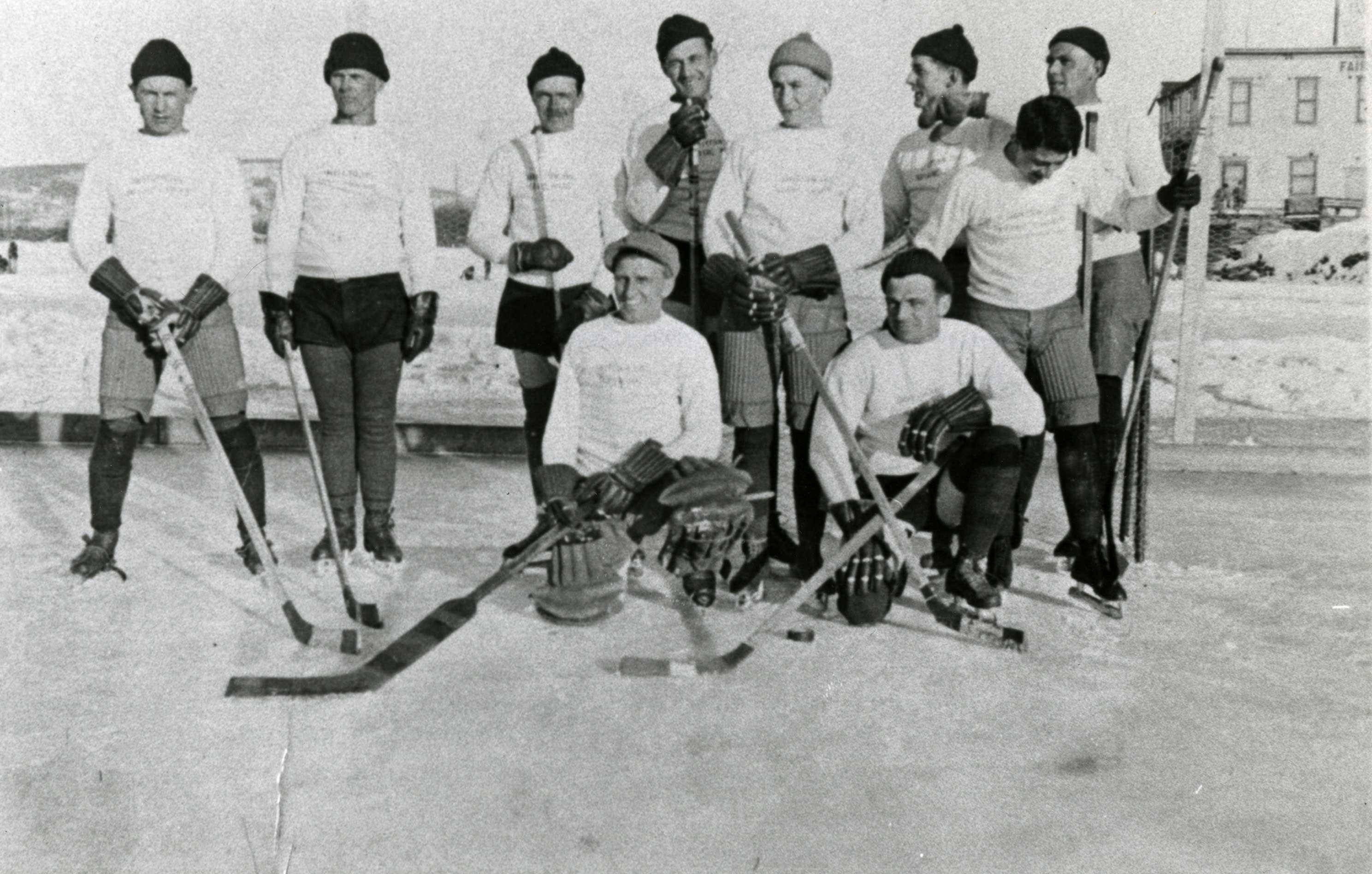
Interesting Facts About Anchorage Alaska include this one for all you hockey fans.
When did Anchorage get its first hockey team?
Answer:
In 1935.
The outdoor rink's advertisers included The Frisco Cafe, Elkmanns Furniture, and Piggly Wiggly Market.
BONUS
Both Elkmanns and Piggly Wiggly found a home in the Anchorage Commercial Building at 4th Avenue and H Street, seen in the picture below.
The First
Grocery Store Chain
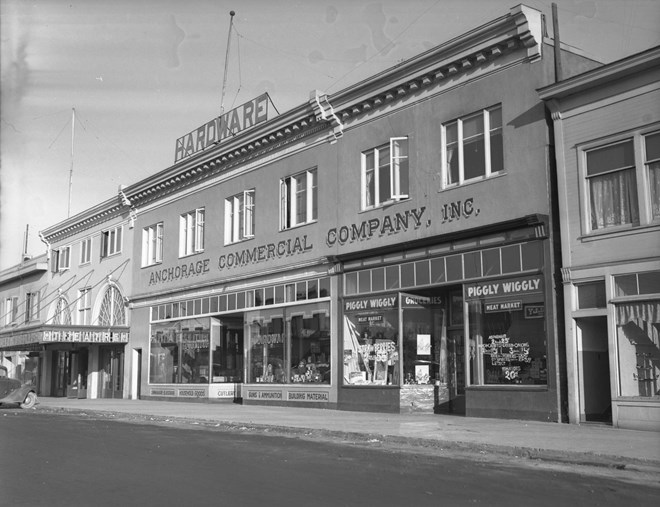
A local favorite.
Today, with so many grocery stores where you can easily shop, do you know what grocery chain was first in town? You may have shopped in one, and they're still around in many places in the United States.
The first chain grocery store was the Piggly Wiggly Market, which opened in 1947 at 4th and H Street in the Anchorage Commercial Company building.
Look in the lower right of the picture above to see the store.
The Merrill Field Tower
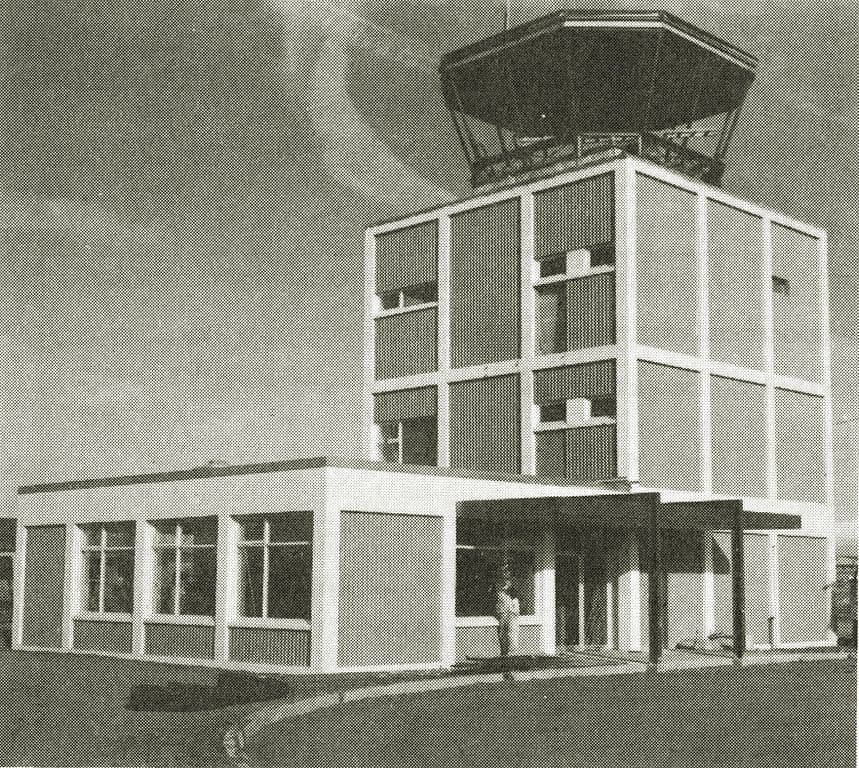
Very busy during World War II.
Merrill Field
Named after Alaska aviation pioneer Russel Merrill, Merrill Field was established at the eastern end of 5th Avenue in 1930.
And for the next 21 years, Merrill Field was the only airport in Anchorage, bringing people and much-needed supplies to town.
Merrill Field remains open to this day,
When the parents of Anchorage Memories.com website author Michael R. (Mike) Dougherty first came to town in 1949, they landed at Merrill Field.
BONUS
Merrill Field was home to the very first aviation beacon in the Territory of Alaska.
Interesting Facts About
Anchorage Alaska
Anchorage
International Airport,
now Ted Stevens
Anchorage
International Airport
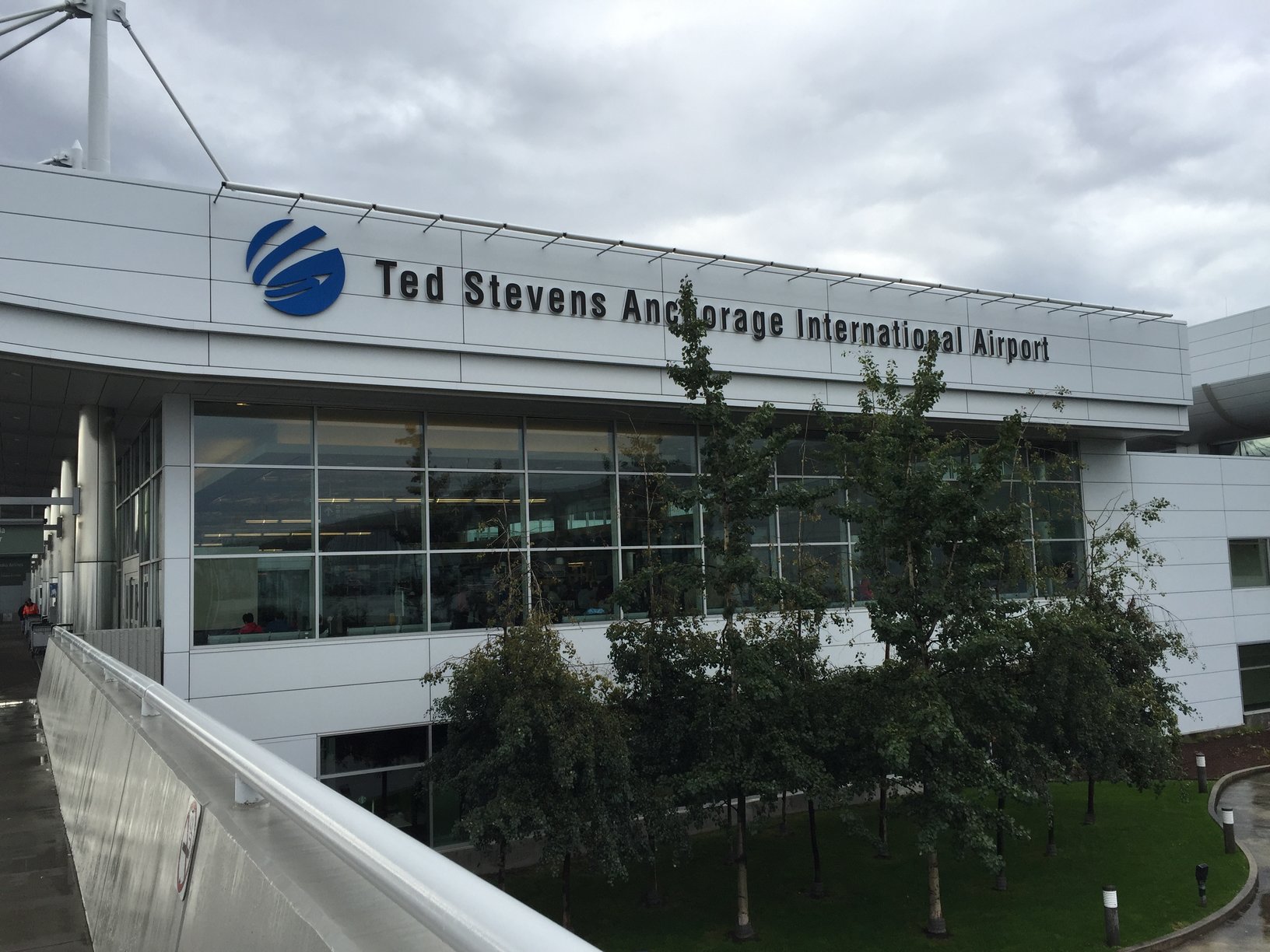
When did Anchorage International Airport First Open?
Now Ted Stevens Anchorage International Airport (renamed after Alaska Senator Ted Stevens), it first opened on December 10th in 1951.
It is now the 3rd busiest cargo airport in the world.
This new airport replaced Merrill Field as a place to land for large passenger planes and soon became known as the “Air Crossroads of the World.”
Espresso Anyone?
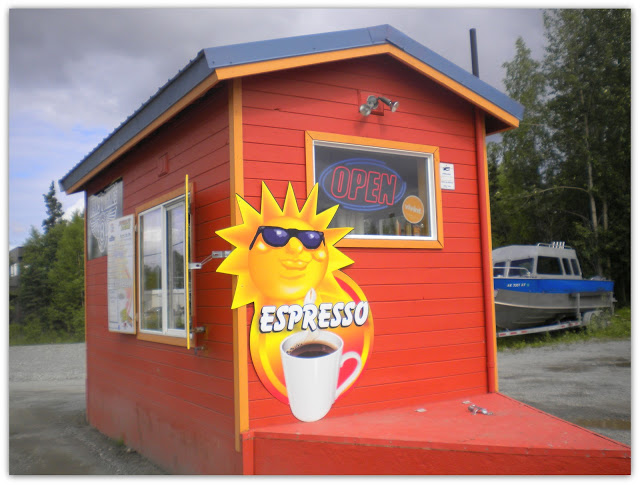
If you're an Anchorage Alaska Facts checker, here's one.
It could be the cold climate, but are more espresso coffee stands in the city of Anchorage than there are anywhere else in the United States.
Next order, please.
Military
in Anchorage
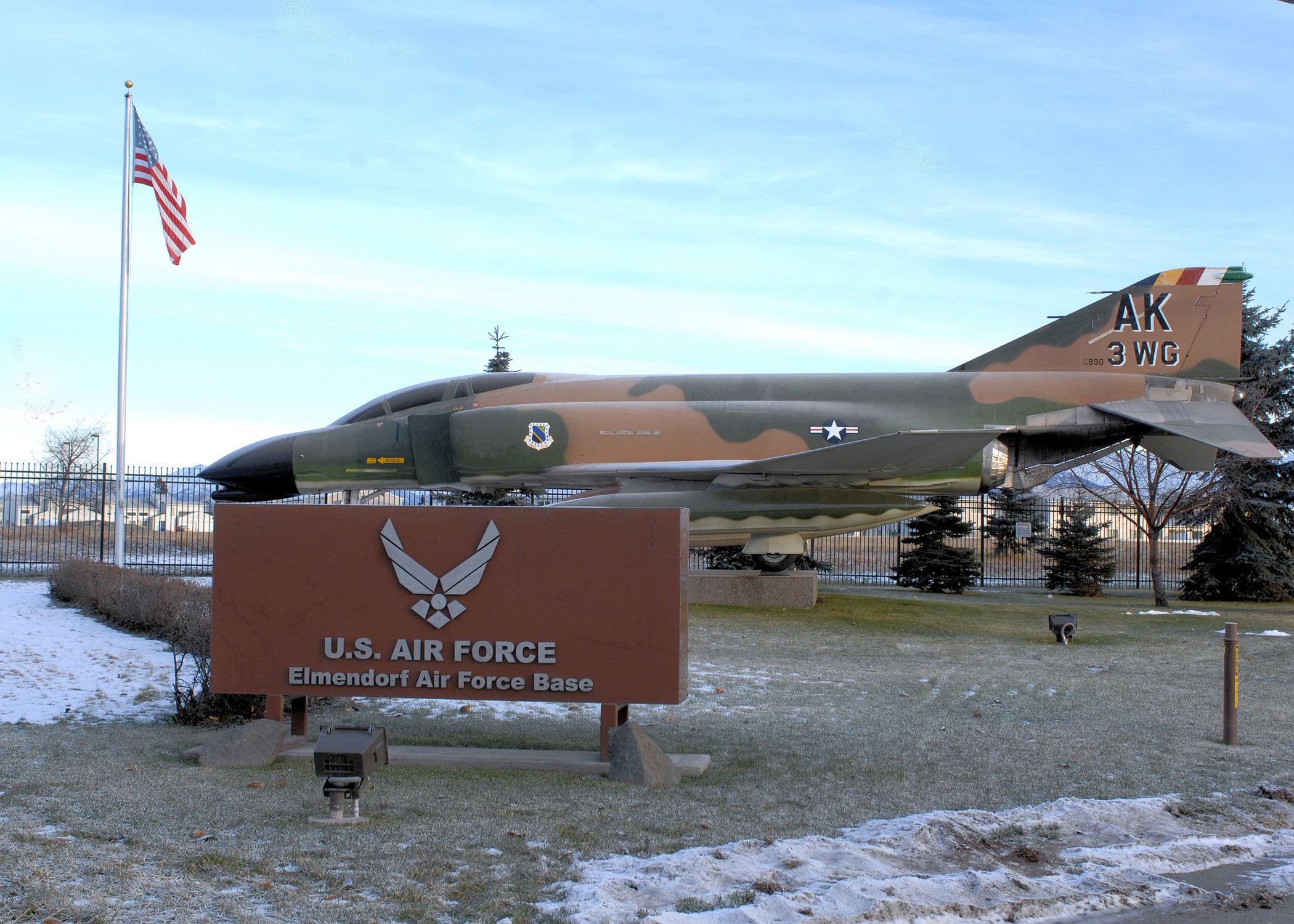
A proud Alaskan tradition.
Elmendorf and
Fort Richardson
World War II had a lot to do with the building of both Elmendorf Air Force Base and the Fort Richardson Army Base. Both came about in the 1940s.
For kids attending school in Anchorage, having friends who had a parent in the military meant that when the military rotated your friends parents to their next assignment, you had to say goodbye to your friends.
During World War II, my dad, Ray Dougherty, served his country in the Army and landed at Elmendorf on his way to the Aleutian Islands with an anti-aircraft gun crew. Dad liked what he saw, and in 1950, he moved our family from California to Anchor Town, where we lived for many years.
Because of Elmendorf Air Force Base and Fort Richardson Army Base, Anchorage is also the location of the headquarters of the Alaska Defense Command.
In 2005, both bases formed Joint Base Elmendorf–Richardson.
Anchorage, Alaska
Circa 1953
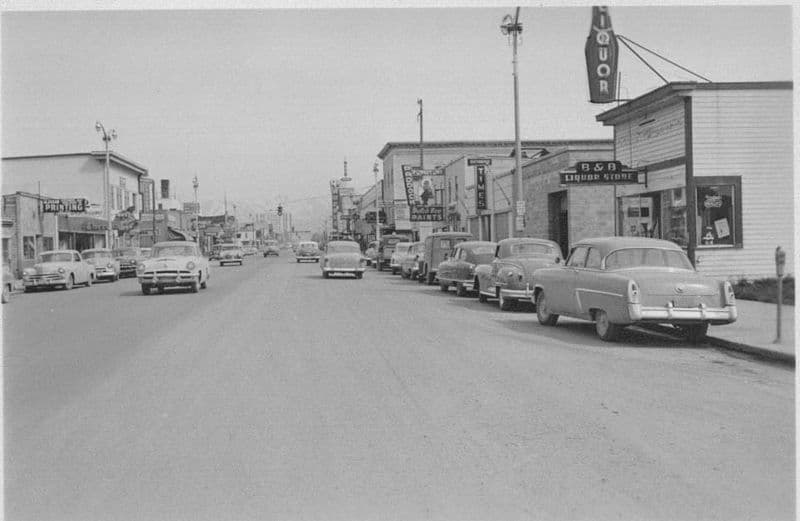
A street filled with memories.
In the photo above is 4th Avenue. Notice the 4th Avenue Theater sign in the background in the center of the picture.
If you ask someone who lives in Anchorage where the “main downtown street” is, they will tell you that it's 4th Avenue.
A Modern
City Skyline
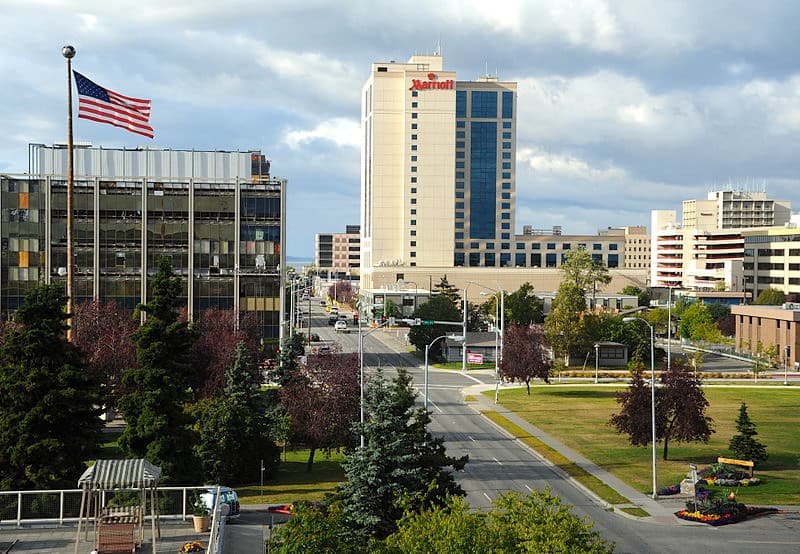
From tent city to a modern city.
Those early pioneers who first came to join the men and women living in the tent city set up on Ship Creek Flats would probably have a hard time recognizing today's Anchorage.
The First
Traffic Light
Interesting Facts About Anchorage Alaska include this.
If you could name one street in town that citizens think of as the most downtown street, it would likely be 4th Avenue.
Back in 1951, 4th Avenue became the home of the town's very first traffic light.
Today, it's a modern city with many more streets and lots and lots of traffic lights.
The Most
Diverse Community
in Anchorage is...
According to the 2010 census:
Anchorage's Mountain View neighborhood is the most diverse community in the United States.
Hey, Let's Ski
to Work
There are 105 miles of groomed cross-country ski trails for Anchorage residents to enjoy in the winter time.
In summer, they become walking and jogging trails.
Now
That's a Lot
of Freight
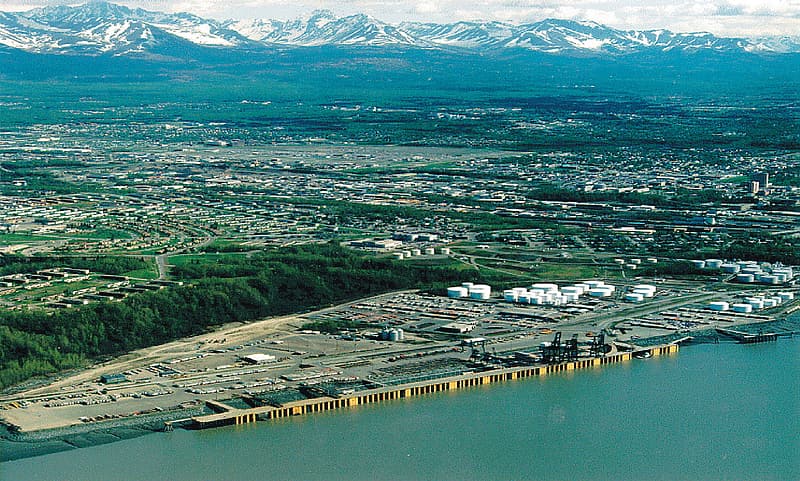
The very busy Port of Anchorage.
The town's port receives 95% of all the freight coming into Alaska.
Note:
And while it's difficult to believe now, before 1915, the community of Knik, just across Cook Inlet, was where most of the freight in Alaska shipped in and out.
By the way, when the railroad came to Anchorage, Knik became a ghost town.
No Snakes Please
There are no snakes that are native to Anchorage or Alaska.
Watch Out
for Wildlife!
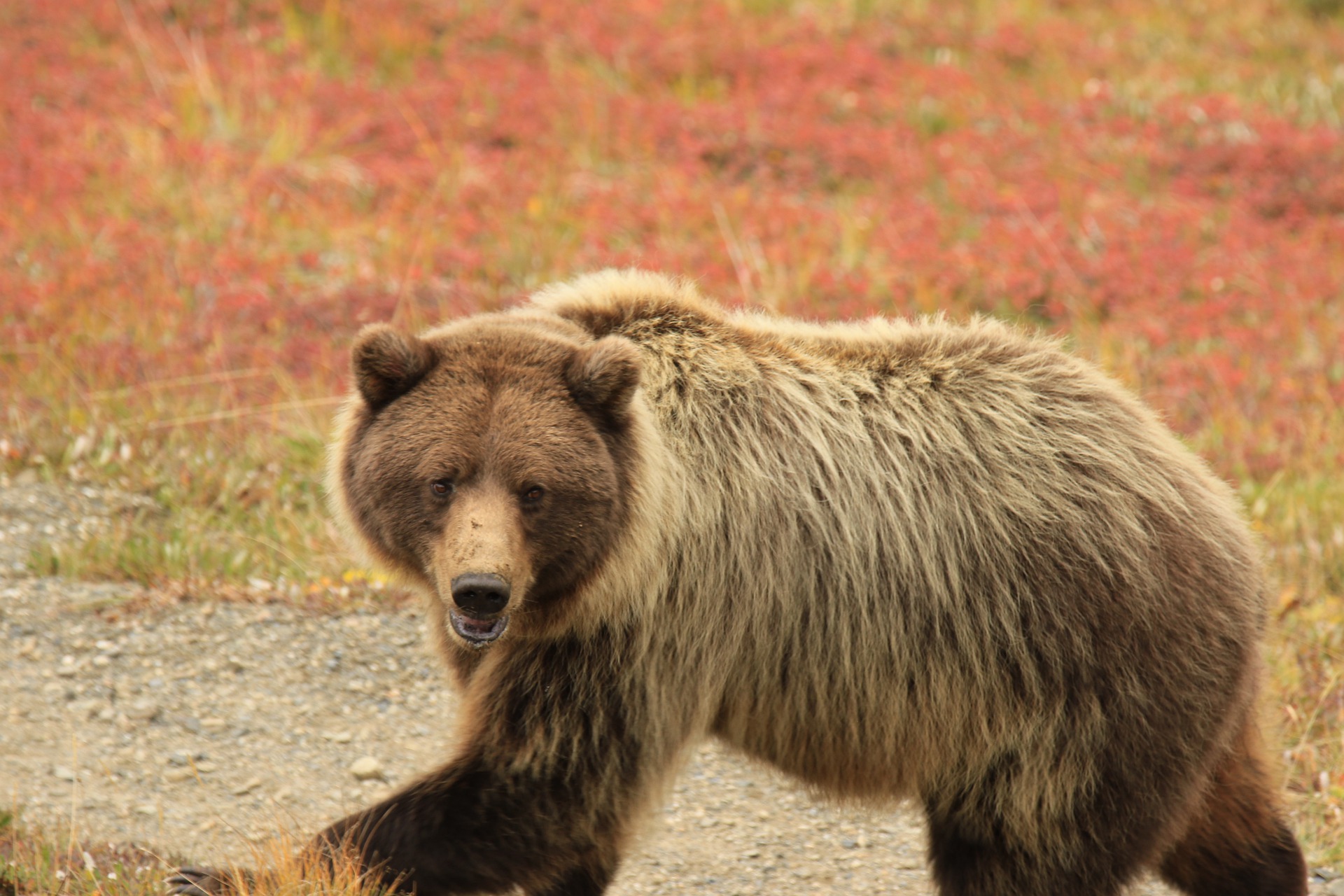
"Hey, I'm not a tourist; I'm a local."
Around 250 black bears and 60 grizzly bears live right within the city limits. Not to mention the many moose who call the area home.
And speaking of moose, many Anchorage residents have stories to tell about moose encounters. Some have even had to call work to say, “I'll be late because there is a moose at my front door.”
There are also wolves, beavers, and foxes within the city limits.
Catching
Salmon
in Town
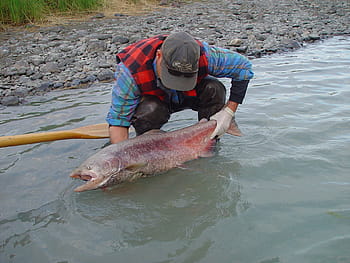
A great place to catch a big one.
In the summer, you can fish for silver salmon and king salmon in Ship Creek, located in a small valley between downtown and Government Hill.
Creeks and lakes in town are regularly stocked with fish.
Interesting Facts About
Anchorage Alaska
The Best
Drinking Water
It's official… The American Water Works tells us that Anchorage enjoys some of the best-tasting drinking water in America. And that's a fact.
Here's a Fun Story:
Mike of Anchorage Memories recalls a trip to Texas one summer when he opened the refrigerator at his grandmother's house and spotted a pitcher of water.
“Why do you have a pitcher of water in the refrigerator?” asked Mike.
After his grandmother answered his question, she asked Mike, “Don't you keep a pitcher of water in the refrigerator in Alaska?”
Mike answered by saying, “No, Grandma, it comes out of the faucet cold.”
Surrounded
by Glaciers
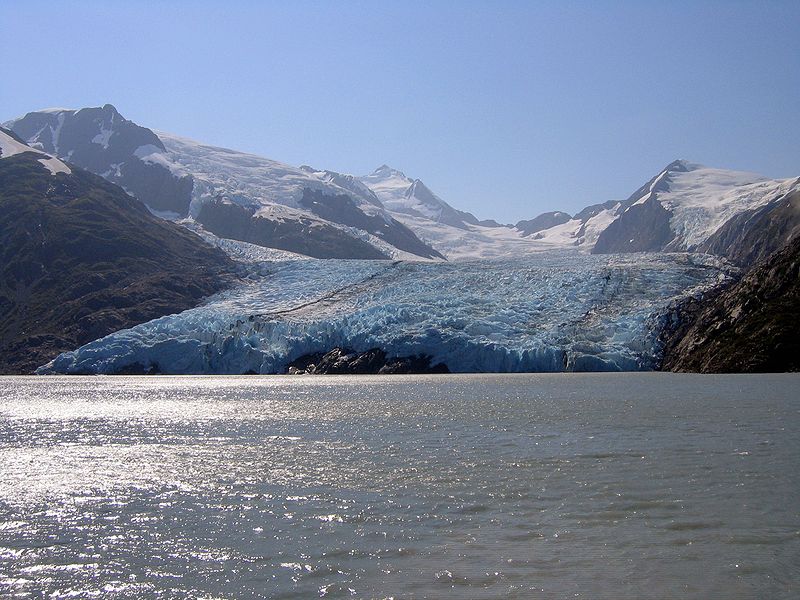
Photo by Zdenek Svoboda
One of the good things about Alaska.
Are you ready for some Glacier viewing?
There are 60 glaciers within just 50 miles of town.
What do
Anchorage and Honolulu
have in Common?
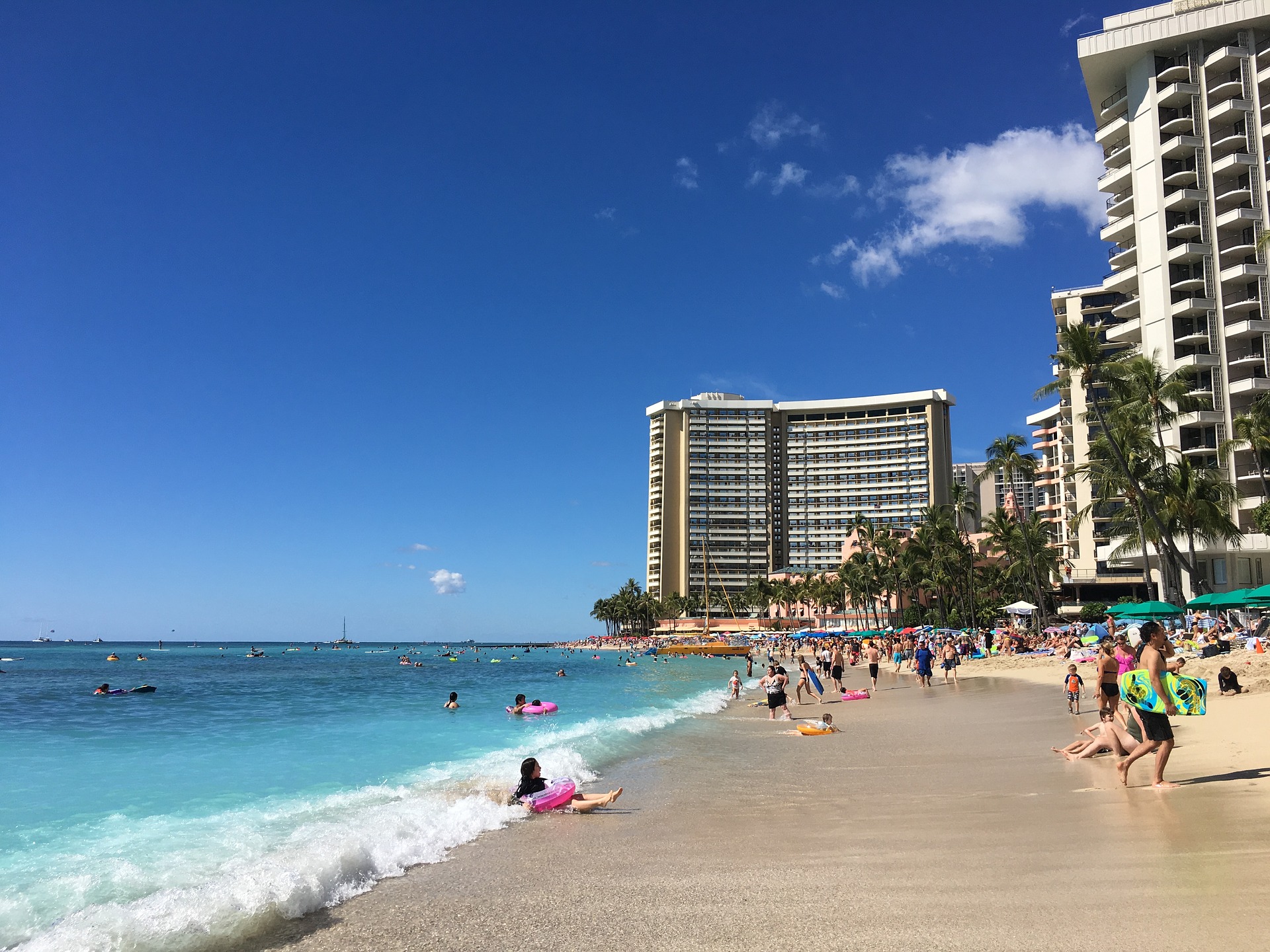
A fun place to take a winter break.
Anchorage is nearly as far west as the sun-baked, ocean-breeze kissed city of Honolulu, Hawaii.
The Biggest Winter Carnival
in the World
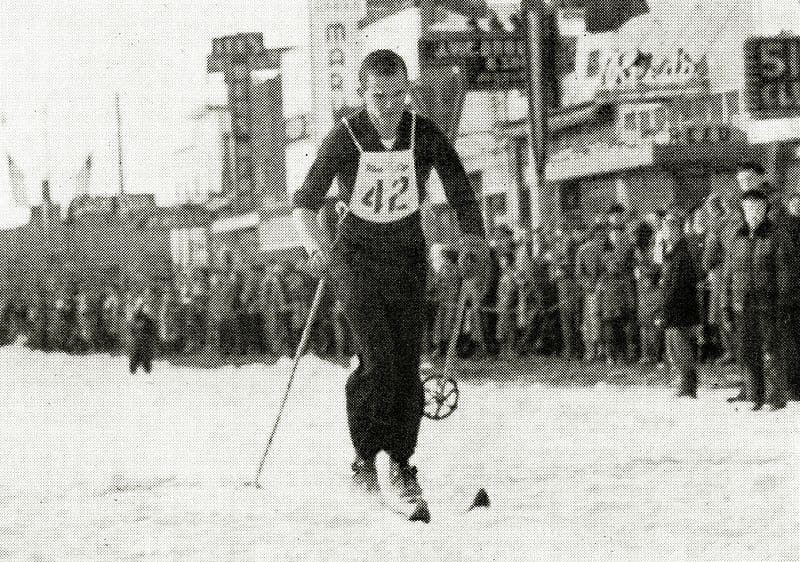
How many businesses do you recognize?
In the picture above:
Grant Fritz is competing in the Anchorage High School Rendezvous race on 4th Avenue in 1950.
Take a look at these Interesting Facts About Anchorage Alaska.
From its beginnings as a small gathering in 1935, when homesteaders and trappers came into town for a few days of fun after a long Alaska winter, the Fur Rendezvous is now officially the world's largest Winter Carnival.
Visitors, from all over the world now come to Anchorage for this grand celebration.
The First
Fast Food Restaurant Chain
in Anchorage
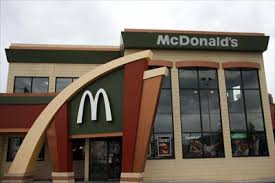
Yes, Anchorage has them.
McDonald's claims the honor of being the first fast food restaurant chain in town.
It opened in July 1970 on the corner of Northern Lights and Arctic to a very excited crowd.
Modern Seward Highway
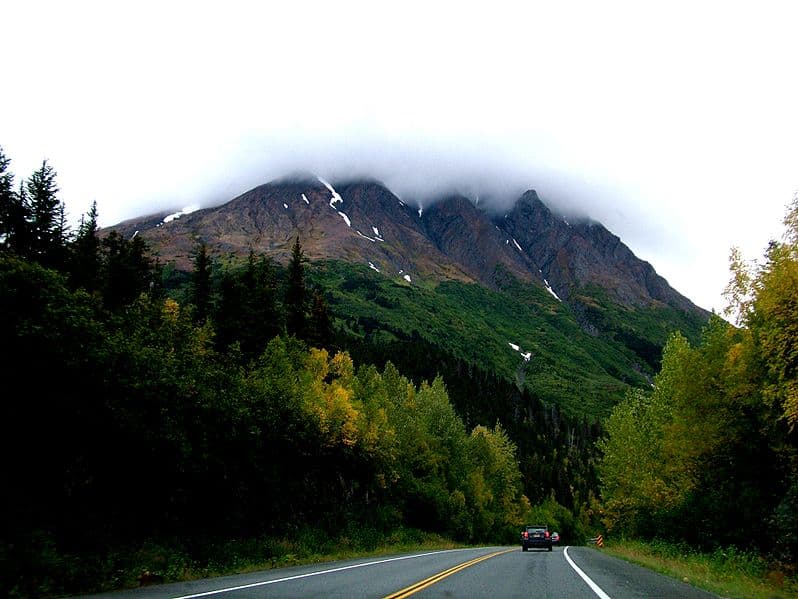
A beautiful drive through Southcentral Alaska.
Completed in 1951, the Seward Highway begins in Anchorage.
Ray Dougherty, the dad of Mike Dougherty of Anchorage Memories, was a heavy equipment operator on a section of the road from Anchorage to Girdwood. It was his first job in Alaska.
The Seward Highway runs 125 miles from Anchorage to Seward through beautiful forests and along mountains and waterfalls.
The United States purchased Alaska from Russia for 7.2 million dollars. Secretary of State William Seward signed the purchase. This popular Alaska highway is his namesake.
How Many Mountain Ranges
Can You See?
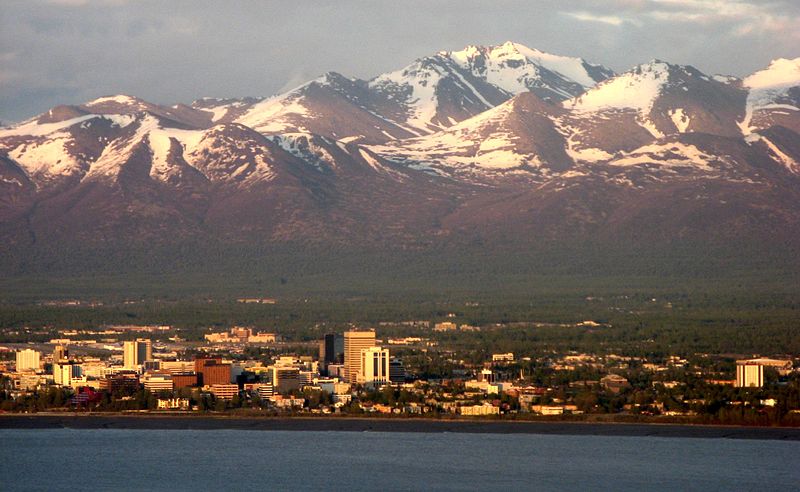
Photo by Frank K
The majestic Chugach Mountains.
From Anchorage, you can see 6 mountain ranges.
The Chugach (pictured above), Talkeetna, Tordrillo, Kenai, Alaska, and the Aleutian ranges.
On clear days, residents can see Denali, the tallest mountain in North America.
Where is
the World's Busiest
Seaplane Base?
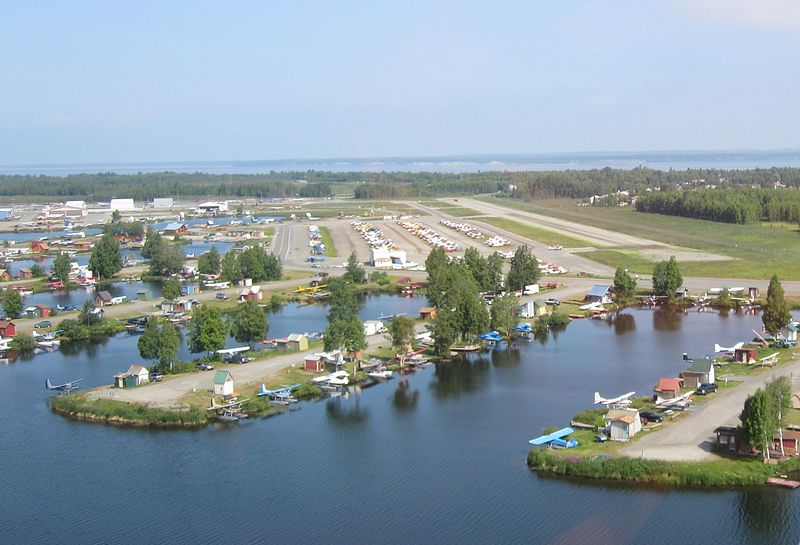
Photo by N727RH
Have you ever flown from Lake Hood?
Interesting Facts about Anchorage Alaska include this one.
Just about 3 miles from downtown, you'll discover Lake Hood. It has an average of 190 small aircraft flights in and out each day.
In the summer, planes take off and land on the lake using “pontoons.” In the winter, they use snow skis.
Anchorage Celebrated
Alaska Statehood
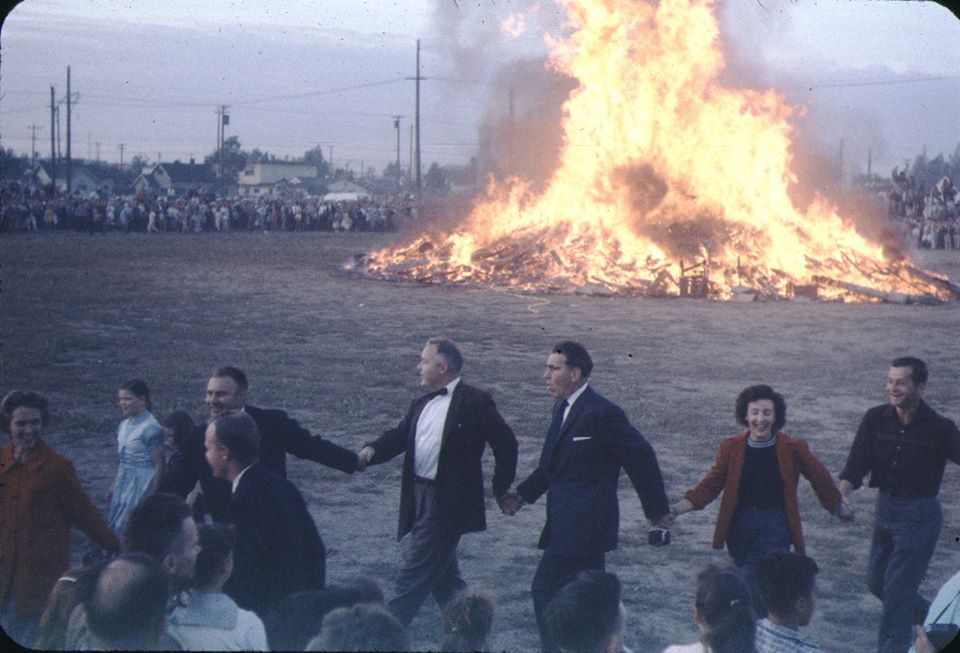
Photo by Ken Parker
In the Photo Above:
The statehood bonfire in Anchorage.
On January 3, 1959, Alaska became the 49th state.
Mike of Anchorage Memories was only 3 years old when he first moved to Anchorage. But Alaska was still a territory, and Mike became upset while visiting family in Texas. His relatives told Mike that Alaska wasn't a state (it was still a territory at the time).
Mike couldn't understand why his parents would move the family “outside” the United States.
But when statehood did come to Alaska, it also brought a sudden increase in population. So much so that it caused a “severe” housing shortage.
To celebrate its newfound statehood, Anchorage residents put together a considerable celebration, including a large bonfire—attended by Mary J. Dougherty of Anchorage Memories.
1964 Earthquake
in
Anchorage, Alaska
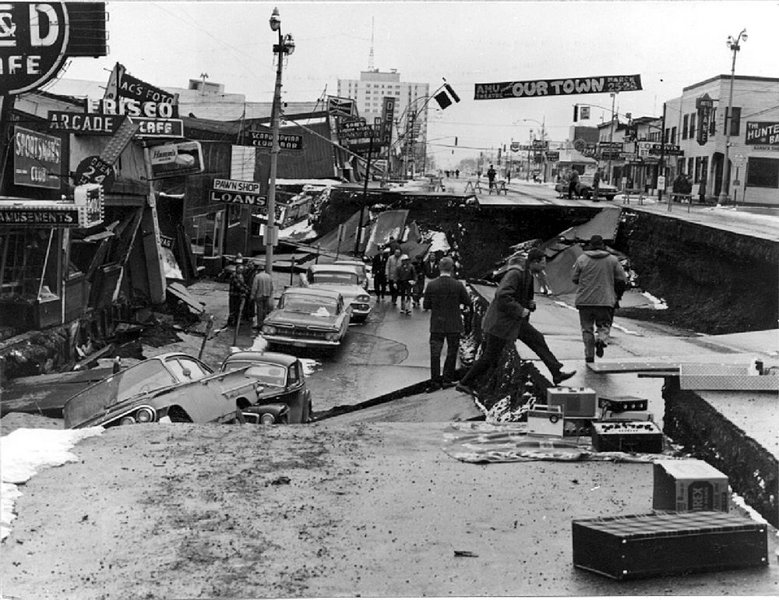
The power of nature.
It happened on Good Friday, March 27, 1964.
The quake measured 9.2 on the Richter earthquake scale and shook for 5 minutes.
When the quake was finally over, the destruction was unimaginable.
BONUS
Survivors remember the 1964 earthquake.
Take a look at 1964 Anchorage Earthquake Survivors Stories and imagine what they went through.Facts About Anchorage Alaska
Wouldn't Be Complete
without a look back at
Local Radio and Television
The First
Radio Station
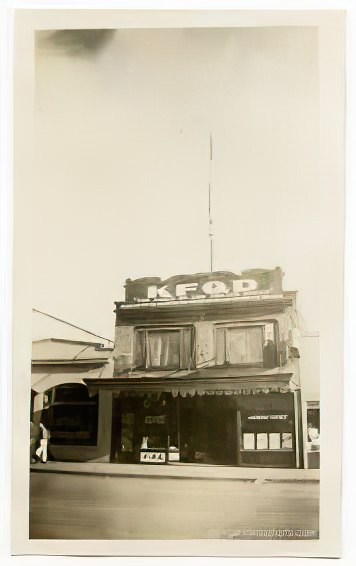
An early pioneer.
KFQD wasn't just the first radio station in Anchorage—it was the first radio station in Alaska.
On May 17, 1924, KFQD radio first signed on the air.
And while that was a bunch of years ago, KFQD radio is still broadcasting today.
Past KFQD radio personalities include Herb Shaindlin, Marcus in the Morning, Ron Moore, and many others.
The First
Television Station
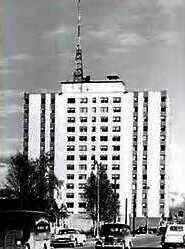
Do you enjoy Interesting Facts About Anchorage Alaska?
Take a look at the picture above of this iconic McKinley building (the building's first name) on famed 4th Avenue.
On top of the building is the broadcast tower of KTVA channel 11, Anchorage's first television station.
Started by Augie Hiebert, KTVA began broadcasting on December 11, 1953, and broadcast from 2:00pm to 11:30pm from the first floor of the McKinley building (now the McKinley Tower Apartments at 337 E. 4th Avenue).
The First
Color TV Show
Seen in Anchorage
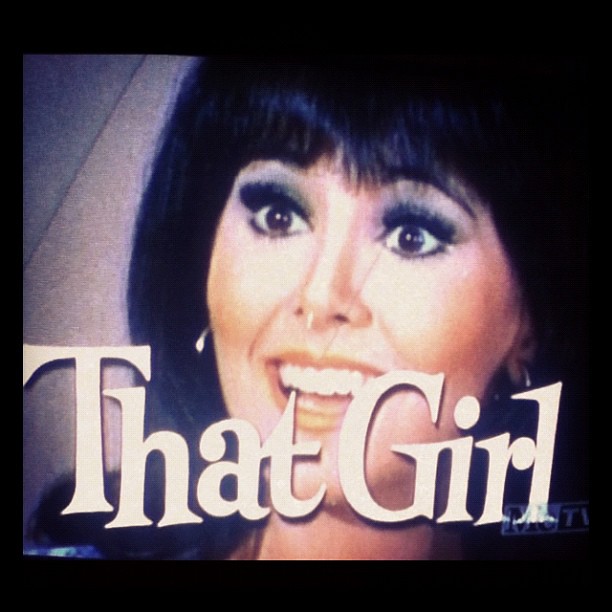
Did you tune in to watch?
Even if you didn't have a color TV?
On September 19, 1966, KENI-TV channel 2 (now KTUU) broadcast the first color TV show to happy Anchor Town audiences.
The show was an episode of the ABC Television Network's popular sitcom, “That Girl,” starring Marlo Thomas in an episode titled “Don't Just Do Something. Stand There!”
Would You Like
to Learn More?
While these interesting facts about Anchorage Alaska have barely scratched the surface, you probably did learn a thing or two about Alaska's largest city that you didn't know before.
The largest city in the Great Land, as it's often called, has a colorful history. And it claims more than its share of colorful characters like Joe Spenard, Russian Jack, and many others who came to this last frontier to build a life for themselves.
You can learn more in the following publication you're about to discover.
Yours Free
These aren't just videos about Anchorage--they're the kind of memories worth keeping close.
Wonderful memories of the Anchorage you love
Delivered by email
“Always a great read” Tony
You might like these
Fun Facts About Anchorage Alaska | Remember When?
Explore Fun Facts About Anchorage Alaska that locals swap at reunions: the Royal Pad, Site Summit Star, Merrill Field origins, and photo-rich surprises.
History of Anchorage Alaska | 1915 City of Tents
Step back in time with History of Anchorage Alaska - from the 1915 city of tents at Ship Creek to railroads, pioneers, and the 1964 quake plus old photos and stories.

Yours Free
These aren't just videos about Anchorage--they're the kind of memories worth keeping close.
Wonderful memories of the Anchorage you love
Delivered by email
“Always a great read” Tony

Use our digital tip jar if you enjoy the stories, photos, and videos on this website.
Mike and Mary Jane appreciate your generosity.

Here is our Heartfelt Anchorage Memories Mission
We’re dedicated to preserving and sharing the treasured memories of life in Anchorage, Alaska—from captivating stories and cherished photographs to vibrant videos—spanning from Anchorage's inception in 1915 all the way through the 1970s.
Join us as we uncover the rich tapestry of Anchorage’s history together.
This Anchorage, Alaska Memories website
created by
Mike and Mary Jane Dougherty
Copyright © 2016–2026 Anchorage Memories.com
All Rights Reserved